
The Story of Our Logo
From the earliest days of Voluntas Dei, its emblem has expressed a simple and enduring mission: the Cross planted in the world.
The original coat of arms, proposed by Laurent-Paul Gendron, placed the Cross above a globe, representing the call to carry Christ wherever God sends us. An “M” for Mary reflected the Institute’s motto, Voluntas Dei per Mariam Immaculatam — the Will of God through Mary Immaculate.
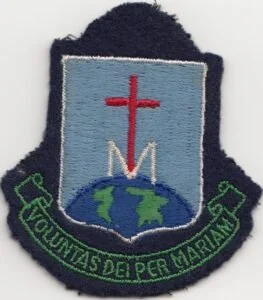
That symbolism became especially meaningful in 1958, when Father Louis-Marie Parent and the first members arrived at Notre-Dame de la Salette in Trois-Rivières. There, they discovered a cornerstone bearing an image remarkably similar to their newly created coat of arms. They received it as a providential sign affirming the foundation of the Institute.
The Institute’s original 1958 logo, embroidered on a fabric patch
A Renewed Expression of the Same Identity
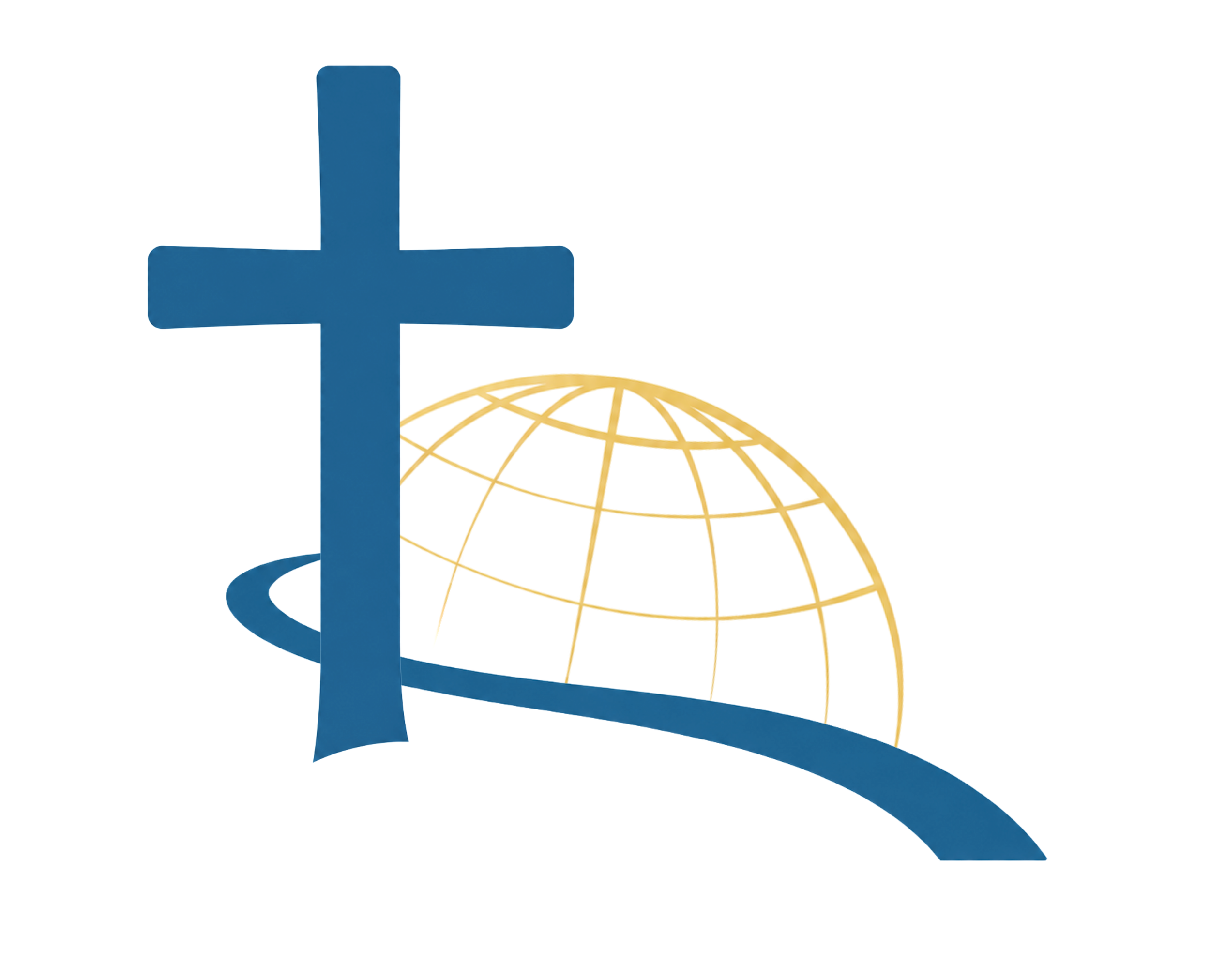
Over time, the emblem evolved, allowing the Cross to take greater visual prominence while the blue continued to carry its Marian significance.
Today’s logo carries that same story forward. The Cross remains at its center, rooted in the globe, a reminder that this vocation is lived fully in the world — in families, workplaces, parishes, communities, and the ordinary circumstances of daily life. Its renewed form gives this historic symbol a clear, contemporary expression while remaining grounded in the identity of the Institute.
MARY & THE ANNUNCIATION
Mary holds a special place in the spirituality of Voluntas Dei because her life reveals what it means to receive and live the will of God.
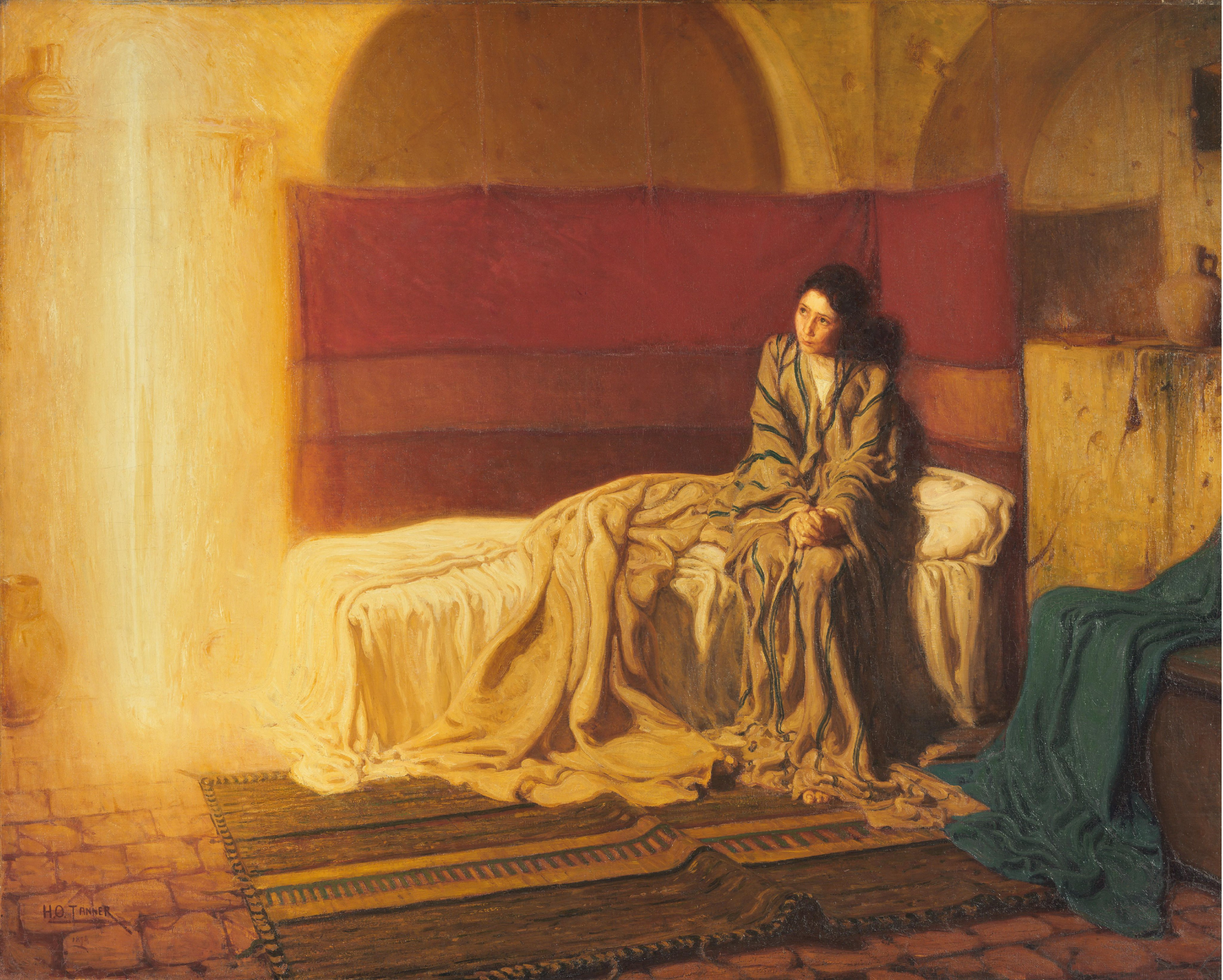
Henry Ossawa Tanner’s The Annunciation (1898), featured on our homepage, captures that moment with striking intimacy. Mary encounters God’s invitation in the simplicity of an ordinary room. She listens, receives, and responds — offering the yes through which Christ enters the world.
Her example speaks directly to the mission of Voluntas Dei: to discern, love, and live God’s will in the present moment. Like Mary, members are called to remain attentive to God within everyday life and, through their own faithful response, carry Christ into the world.
Mary receives. Christ enters. The mission begins.